[You for] the fragrant-blossomed Muses' lovely gifts
[be zealous,] girls, [and the] clear melodious lyre:
[but my once tender] body old age now
[has seized;] my hair's turned [white] instead of dark;
my heart's grown heavy, my knees will not support me,
that once on a time were fleet for the dance as fawns.
This state I oft bemoan; but what's to do?
Not to grow old, being human, there's no way.
Tithonus once, the tale was, rose-armed Dawn,
love-smitten, carried off to the world's end,
handsome and young then, yet in time grey age
o'ertook him, husband of immortal wife.
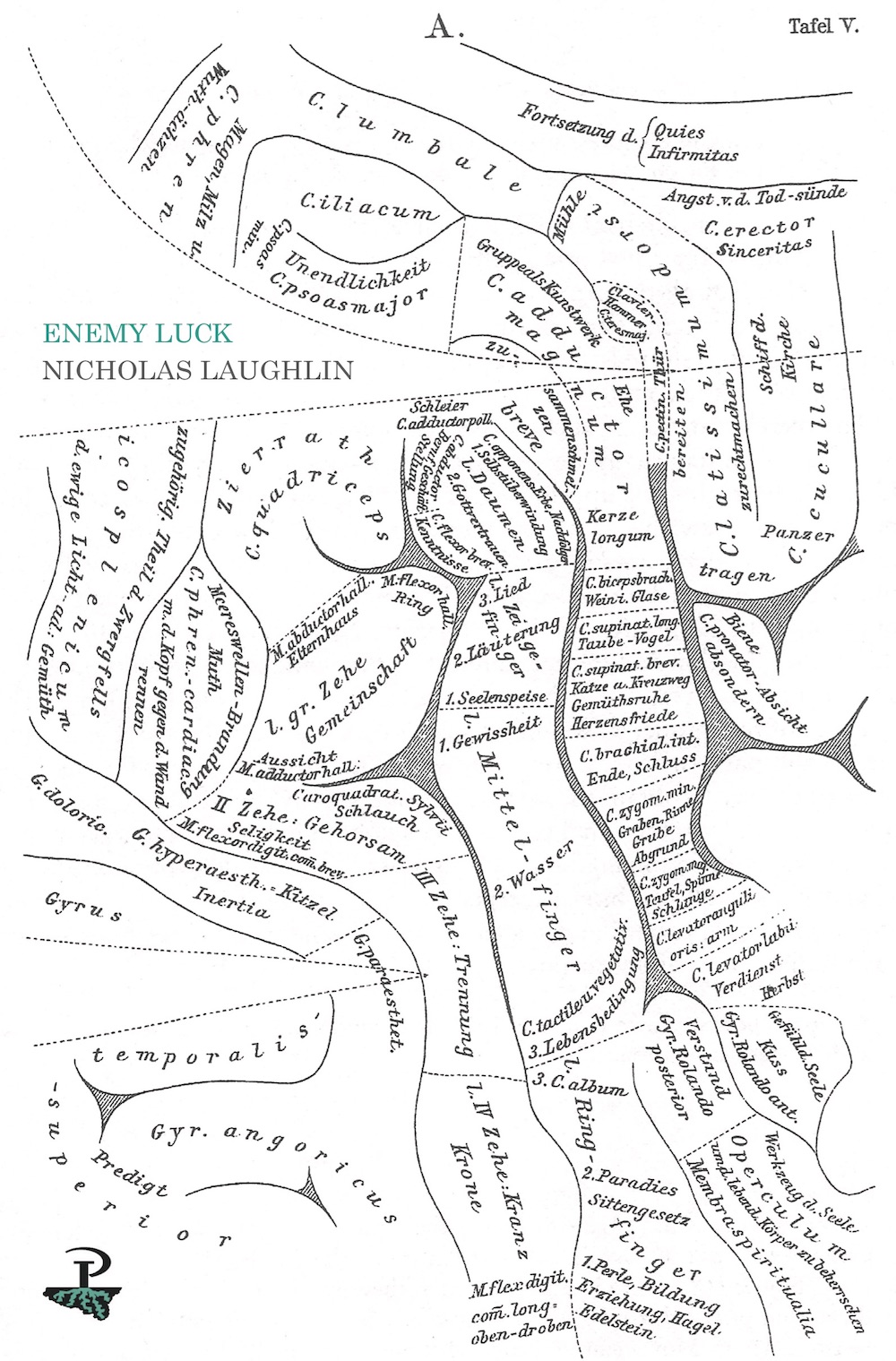
-- Only the fourth "complete" poem by Sappho known to modern scholarship, finally revealed by a find in Cologne last year, published for the first time in the TLS today, translated with a short commentary by Martin West. (Not sure if the link will be good for longer than a week.)
Friday, June 24, 2005

Wednesday, June 22, 2005
Yesterday UNESCO announced the latest additions to the Memory of the World Register (a list of archive holdings & library collections of global importance); among the 29 new additions is the C.L.R. James Collection at the Main Library, UWI, St. Augustine:
Trinidad & Tobago - C.L.R. James Collection
The C.L.R. James Collection consists of original documents including correspondence, manuscripts, pamphlets, personal and literary papers of the late Cyril Lionel Robert James (1901-1989). James was a leading theoretician of the Trotskyite wing of American communism and the main ideologue and leftist thinker of the nationalist movement in Trinidad and Tobago during its most radical phase from 1958 to 1960. Born in Trinidad and Tobago, C.L.R. James spent much of his life in Britain and the United States. His influence spanned the Caribbean, Africa, the United Kingdom and the United States of America. The collection is kept at the University of the West Indies, in Trinidad.
(Two other collections at UWI-St. Augustine are already on the register: the Derek Walcott Collection & the Eric Williams Memorial Collection.)
Also new to the register: the José Martí papers at the Centro de Estudios Martianos in Havana. (There are as yet no other Caribbean collections on the Memory of the World Register.)
(Thanks, Georgia, for pointing this out!)
Trinidad & Tobago - C.L.R. James Collection
The C.L.R. James Collection consists of original documents including correspondence, manuscripts, pamphlets, personal and literary papers of the late Cyril Lionel Robert James (1901-1989). James was a leading theoretician of the Trotskyite wing of American communism and the main ideologue and leftist thinker of the nationalist movement in Trinidad and Tobago during its most radical phase from 1958 to 1960. Born in Trinidad and Tobago, C.L.R. James spent much of his life in Britain and the United States. His influence spanned the Caribbean, Africa, the United Kingdom and the United States of America. The collection is kept at the University of the West Indies, in Trinidad.
(Two other collections at UWI-St. Augustine are already on the register: the Derek Walcott Collection & the Eric Williams Memorial Collection.)
Also new to the register: the José Martí papers at the Centro de Estudios Martianos in Havana. (There are as yet no other Caribbean collections on the Memory of the World Register.)
(Thanks, Georgia, for pointing this out!)
Sunday, June 19, 2005
A reality TV show is being filmed in Tobago. The shapely cast of MTV's Real World/Road Rules Challenge series has flown in to compete in over 16 mind and muscle-wrenching survivor-type episodes, called "Gauntlet 2", being shot at various picturesque locations over the next three to four weeks.
For a reality show, the main venue is, for some critics anyway, quite unreal.
Less than two months after Tobago hosted the "7th Annual Conference on Sustainable Tourism Development", permission has been granted to the American cable network to film part of their series upon the sands of Tobago's most famous, and important, nesting site for globally-endangered Leatherback turtles--Turtle Beach.
The location along Greater Courland Bay that MTV have chosen for their "beached" galleon structure and shoot happens to be right on top of one of the turtles' favourite egg-laying spots, during the most important breeding month of the year.
--From Mark Meredith's report in today's Express.
For a reality show, the main venue is, for some critics anyway, quite unreal.
Less than two months after Tobago hosted the "7th Annual Conference on Sustainable Tourism Development", permission has been granted to the American cable network to film part of their series upon the sands of Tobago's most famous, and important, nesting site for globally-endangered Leatherback turtles--Turtle Beach.
The location along Greater Courland Bay that MTV have chosen for their "beached" galleon structure and shoot happens to be right on top of one of the turtles' favourite egg-laying spots, during the most important breeding month of the year.
--From Mark Meredith's report in today's Express.
Thursday, June 16, 2005
Joyce's Ireland was like Naipaul's Caribbean in many ways. Full of mimic men, emptiness and the nightmare of history, trapped by the nets of race and religion. He chose exile over acquiescence and held his course in difficult circumstances while public taste inched towards his work.
From the Bloomsday editorial in today's Stabroek News!
From the Bloomsday editorial in today's Stabroek News!
Wednesday, June 15, 2005
Tuesday, June 14, 2005
Jeffares was born in Dublin and went to the city's high school. A much retold anecdote is his writing to the Nobel laureate (a former pupil) for a contribution to the school magazine. Yeats demurred, Jeffares insisted, and got his poem, "What Then?", Sang Plato's Ghost. A prophetic achievement.
R.I.P. A. Norman Jeffares (editor of the paperback selected edition that was my introduction to Yeats, my favourite poet)
R.I.P. A. Norman Jeffares (editor of the paperback selected edition that was my introduction to Yeats, my favourite poet)
Wednesday, June 08, 2005
From the Guyana Project
Leave behind you your high-seasoned dishes, your wines and your delicacies: carry nothing but what is necessary for your own comfort and the object in view, and depend upon the skill of an Indian, or your own, for fish and game. A sheet about twelve feet long, ten wide, painted, and with loop- holes on each side, will be of great service: in a few minutes you can suspend it betwixt two trees in the shape of a roof. Under this, in your hammock, you may defy the pelting shower, and sleep heedless of the dews of night. A hat, a shirt and a light pair of trousers will be all the raiment you require. Custom will soon teach you to tread lightly and barefoot on the little inequalities of the ground, and show you how to pass on unwounded amid the mantling briers.
Snakes, in these wilds, are certainly an annoyance, though perhaps more in imagination than reality, for you must recollect that the serpent is never the first to offend: his poisonous fang was not given him for conquest--he never inflicts a wound with it but to defend existence. Provided you walk cautiously and do not absolutely touch him, you may pass in safety close by him. As he is often coiled up on the ground, and amongst the branches of the trees above you, a degree of circumspection is necessary lest you unwarily disturb him.
Tigers are too few, and too apt to fly before the noble face of man, to require a moment of your attention.
The bite of the most noxious of the insects, at the very worst, only causes a transient fever with a degree of pain more or less.
-- From Charles Waterton's Wanderings in South America (1825), text available online from Project Gutenberg.
Leave behind you your high-seasoned dishes, your wines and your delicacies: carry nothing but what is necessary for your own comfort and the object in view, and depend upon the skill of an Indian, or your own, for fish and game. A sheet about twelve feet long, ten wide, painted, and with loop- holes on each side, will be of great service: in a few minutes you can suspend it betwixt two trees in the shape of a roof. Under this, in your hammock, you may defy the pelting shower, and sleep heedless of the dews of night. A hat, a shirt and a light pair of trousers will be all the raiment you require. Custom will soon teach you to tread lightly and barefoot on the little inequalities of the ground, and show you how to pass on unwounded amid the mantling briers.
Snakes, in these wilds, are certainly an annoyance, though perhaps more in imagination than reality, for you must recollect that the serpent is never the first to offend: his poisonous fang was not given him for conquest--he never inflicts a wound with it but to defend existence. Provided you walk cautiously and do not absolutely touch him, you may pass in safety close by him. As he is often coiled up on the ground, and amongst the branches of the trees above you, a degree of circumspection is necessary lest you unwarily disturb him.
Tigers are too few, and too apt to fly before the noble face of man, to require a moment of your attention.
The bite of the most noxious of the insects, at the very worst, only causes a transient fever with a degree of pain more or less.
-- From Charles Waterton's Wanderings in South America (1825), text available online from Project Gutenberg.
Tuesday, June 07, 2005
From the Guyana Project
The Guyana Heritage Society has expressed concern over reports that the National Archives collection was being moved temporarily to the National Cultural Centre, as the building housing it had been sold.
"We're losing our history," society member and local historian, Professor Sister Mary Noel Menezes said yesterday, addressing the state of affairs of the National Archives and the deterioration of materials during handling and movement from one location to another.
Full story in today's Stabroek News.
The Guyana Heritage Society has expressed concern over reports that the National Archives collection was being moved temporarily to the National Cultural Centre, as the building housing it had been sold.
"We're losing our history," society member and local historian, Professor Sister Mary Noel Menezes said yesterday, addressing the state of affairs of the National Archives and the deterioration of materials during handling and movement from one location to another.
Full story in today's Stabroek News.
Sunday, June 05, 2005
I was too distracted to report on the 2004 Guyana Prizes for Literature when they were announced a week & a half ago, but in his column in today's Stabroek News prize committee chairman Al Creighton summarises the results (fiction winners: David Dabydeen & Fred D'Aguiar; poetry winner: Ian McDonald; first poetry winner: Berkley Semple; drama winner: Paloma Mohamed).
Also in today's Stabroek: Robert Moore's recollections of Walter Rodney as a prodigy at Queen's College in the late 50s.
Also in today's Stabroek: Robert Moore's recollections of Walter Rodney as a prodigy at Queen's College in the late 50s.
Thursday, June 02, 2005
From the Guyana Project
I have formerly remarked that I wished to have it in my power to say that I had been sucked by the vampire. I gave them many an opportunity, but they always fought shy; and though they now sucked a young man of the Indian breed very severely, as he was sleeping in his hammock in the shed next to mine, they would have nothing to do with me. His great toe seemed to have all the attractions. I examined it minutely as he was bathing it in the river at daybreak. The midnight surgeon had made a hole in it almost of a triangular shape, and the blood was then running from it apace. His hammock was so defiled and stained with clotted blood that he was obliged to beg an old black woman to wash it. As she was taking it down to the river-side she spread it out before me, and shook her head. I remarked that I supposed her own toe was too old and tough to invite the vampire-doctor to get his supper out of it, and she answered, with a grin, that doctors generally preferred young people.
Nobody has yet been able to inform me how it is that the vampire manages to draw such a large quantity of blood, generally from the toe, and the patient all the time remains in a profound sleep. I have never heard of an instance of a man waking under the operation. On the contrary, he continues in a sound sleep, and at the time of rising his eyes first inform him that there has been a thirsty thief on his toe.
The teeth of the vampire are very sharp and not unlike those of a rat. If it be that he inflicts the wound with his teeth (and he seems to have no other instruments), one would suppose that the acuteness of the pain would cause the person who is sucked to awake. We are in darkness in this matter, and I know of no means by which one might be enabled to throw light upon it. It is to be hoped that some future wanderer through the wilds of Guiana
will be more fortunate than I have been and catch this nocturnal depredator in the fact. I have once before mentioned that I killed a vampire which measured thirty-two inches from wing to wing extended, but others which I have since examined have generally been from twenty to twenty-six inches in dimension.
-- From Charles Waterton's Wanderings in South America (1825), text available online from Project Gutenberg.
I have formerly remarked that I wished to have it in my power to say that I had been sucked by the vampire. I gave them many an opportunity, but they always fought shy; and though they now sucked a young man of the Indian breed very severely, as he was sleeping in his hammock in the shed next to mine, they would have nothing to do with me. His great toe seemed to have all the attractions. I examined it minutely as he was bathing it in the river at daybreak. The midnight surgeon had made a hole in it almost of a triangular shape, and the blood was then running from it apace. His hammock was so defiled and stained with clotted blood that he was obliged to beg an old black woman to wash it. As she was taking it down to the river-side she spread it out before me, and shook her head. I remarked that I supposed her own toe was too old and tough to invite the vampire-doctor to get his supper out of it, and she answered, with a grin, that doctors generally preferred young people.
Nobody has yet been able to inform me how it is that the vampire manages to draw such a large quantity of blood, generally from the toe, and the patient all the time remains in a profound sleep. I have never heard of an instance of a man waking under the operation. On the contrary, he continues in a sound sleep, and at the time of rising his eyes first inform him that there has been a thirsty thief on his toe.
The teeth of the vampire are very sharp and not unlike those of a rat. If it be that he inflicts the wound with his teeth (and he seems to have no other instruments), one would suppose that the acuteness of the pain would cause the person who is sucked to awake. We are in darkness in this matter, and I know of no means by which one might be enabled to throw light upon it. It is to be hoped that some future wanderer through the wilds of Guiana
will be more fortunate than I have been and catch this nocturnal depredator in the fact. I have once before mentioned that I killed a vampire which measured thirty-two inches from wing to wing extended, but others which I have since examined have generally been from twenty to twenty-six inches in dimension.
-- From Charles Waterton's Wanderings in South America (1825), text available online from Project Gutenberg.
Friday, April 29, 2005
In his celebrated epic poem Omeros (1990), Walcott took Homer to the Caribbean, turning Achilles and Philoctetes into local fishermen. The Prodigal lacks that kind of narrative pull and energy, and it takes a while for the reader to get the hang of it, to see that its shape isn't the arc of a journey but comes from the drift of the poet's mind. What we're offered aren't travel diaries so much as lecture notes - on art, exile, migration, race, empire, love and "the monstrous map ... called Nowhere" where all of us are headed.
-- Blake Morrison reviewing The Prodigal in the UK Guardian a few days ago.
-- Blake Morrison reviewing The Prodigal in the UK Guardian a few days ago.
Friday, April 15, 2005
Born in Fresno, California, the fifth of six children, Constance was a bright girl for whom perhaps the defining moment of her childhood was the discovery of her father's racism. Constance's sense of social justice was ignited by this, and other discoveries, and at the age of 15 she joined the Socialist party.
Three years later, Webb travelled to Los Angeles to listen to the "elegant" C L R James lecturing on The Negro Question. The 37-year-old Trinidadian skilfully engineered the opportunity to spend a few hours alone with Webb before pressing on to Mexico, where he was scheduled to meet Leon Trotsky.
According to Webb's memoir, Not Without Love (2003), James conducted himself as the perfect gentleman and spoke about race issues in the US. For the next six years, James maintained a regular correspondence with her, which amounted to more than 200 letters, published in 1996 in the volume Special Delivery.
Although James barely knew Webb, his emotional investment in her was huge, and the openness and freedom with which he shared his ideas leaves the reader in no doubt as to his profound love for her.
R.I.P. Constance Webb.
Three years later, Webb travelled to Los Angeles to listen to the "elegant" C L R James lecturing on The Negro Question. The 37-year-old Trinidadian skilfully engineered the opportunity to spend a few hours alone with Webb before pressing on to Mexico, where he was scheduled to meet Leon Trotsky.
According to Webb's memoir, Not Without Love (2003), James conducted himself as the perfect gentleman and spoke about race issues in the US. For the next six years, James maintained a regular correspondence with her, which amounted to more than 200 letters, published in 1996 in the volume Special Delivery.
Although James barely knew Webb, his emotional investment in her was huge, and the openness and freedom with which he shared his ideas leaves the reader in no doubt as to his profound love for her.
R.I.P. Constance Webb.
Sunday, April 10, 2005
The gold-stamped lettering on one of artist and chief curator David Boxer’s vitrines at Jamaica’s second National Biennial argues that “Artists Lose Everything when they get into bed with marketing people.” The irony won’t be lost on those who remember how Boxer’s concept of untrained Jamaican “Intuitives” in the late 1970s launched a decade of US sales. But what opened on December 12th at the National Gallery in Kingston and ran through March 29th was less about artists making a stand against the art market than about shaping a massively eclectic show that does what exhibitions of art from a single nation don’t normally achieve. It made a forceful statement that got louder with every piece, and wasn’t drowned out by its own noise. This was the proudest, most vibrant art show in the Anglo-Caribbean.
-- From my friend Leon Wainwright's review of the 2004 Jamaica National Biennial, in the current issue of Arts Fairs International.
-- From my friend Leon Wainwright's review of the 2004 Jamaica National Biennial, in the current issue of Arts Fairs International.
Monday, April 04, 2005
Reading Berryman
I have a tiny little secret hope that, after a decent period of silence and prose, I will find myself in some almost impossible life situation and will respond to this with outcries of rage, rage and love, such as the world has never heard before. Like Yeats's great outburst at the end of his life. This comes out of a feeling that endowment is a very small part of achievement. I would rate it about fifteen or twenty percent. Then you have historical luck, personal luck, health, things like that, then you have hard work, sweat. And you have ambition. The incredible difference between the achievement of A and the achievement of B is that B wanted it, so he made all kinds of sacrifices. A could have had it, but he didn't give a damn....
But what I was going on to say is that I do strongly feel that among the greatest pieces of luck for high achievement is ordeal. Certain great artists can make out without it, Titian and others, but mostly you need ordeal. My idea is this: the artist is extremely lucky who is presented with the worst possible ordeal which will not actually kill him. At that point, he's in business.
-- From John Berryman's Paris Review interview--one of several dozen writers-at-work interviews downloadable at the magazine's DNA of Literature site.
Will I ever write properly, with passion & exactness,
of the damned strange demeanours of my flagrant heart?
& be by anyone anywhere undertaken?
One more unanswerable question.
-- From Berryman's poem "Monkhood", in Love & Fame.
I have a tiny little secret hope that, after a decent period of silence and prose, I will find myself in some almost impossible life situation and will respond to this with outcries of rage, rage and love, such as the world has never heard before. Like Yeats's great outburst at the end of his life. This comes out of a feeling that endowment is a very small part of achievement. I would rate it about fifteen or twenty percent. Then you have historical luck, personal luck, health, things like that, then you have hard work, sweat. And you have ambition. The incredible difference between the achievement of A and the achievement of B is that B wanted it, so he made all kinds of sacrifices. A could have had it, but he didn't give a damn....
But what I was going on to say is that I do strongly feel that among the greatest pieces of luck for high achievement is ordeal. Certain great artists can make out without it, Titian and others, but mostly you need ordeal. My idea is this: the artist is extremely lucky who is presented with the worst possible ordeal which will not actually kill him. At that point, he's in business.
-- From John Berryman's Paris Review interview--one of several dozen writers-at-work interviews downloadable at the magazine's DNA of Literature site.
Will I ever write properly, with passion & exactness,
of the damned strange demeanours of my flagrant heart?
& be by anyone anywhere undertaken?
One more unanswerable question.
-- From Berryman's poem "Monkhood", in Love & Fame.
Sunday, April 03, 2005
If some of these mysterious goings-on remind you of Wilson Harris, the connection is not incidental. McWatt's Guyana is by and large Harris' metaphysical terrain; his settings are the Pomeroon, the Mazaruni, Kaiteur; characters experience "involuntary shudders" and "realize in a flash what they had known intuitively all along". And "Afternoon without Tears"--a strong "tribute" to Guyana's mythmaking genius--is so delightfully accessible, you could be forgiven for suspecting the writer is a Wilson Harris doppelganger.
-- Wyck Williams, writing online at Julie Mango about Suspended Sentences, Mark McWatt's new book of short stories. (I'd never have thought a writer's "accessibility" could bring Wilson Harris to mind.)
-- Wyck Williams, writing online at Julie Mango about Suspended Sentences, Mark McWatt's new book of short stories. (I'd never have thought a writer's "accessibility" could bring Wilson Harris to mind.)
"When readers decide that something is a poem, they read in a different way. As literary critics we would like to think that this is a more thoughtful way, more receptive to the text’s richness and complexity, but in psychological terms it is the same sort of reading produced by a dyslexic reader who finds reading difficult."
Via the Literary Saloon.
Also, via languagehat, a new & potentially fascinating literary blog, The Valve.
Via the Literary Saloon.
Also, via languagehat, a new & potentially fascinating literary blog, The Valve.
Saturday, April 02, 2005
Friday, April 01, 2005
Thursday, March 31, 2005
Today's Stabroek News runs the conclusion of Cecilia McAlmont's two-part profile of Valerie Hart, a key figure in the 1969 Rupununi Uprising (read part one here). As "President of the Essequibo Free State", Hart was both the public face of the rebellion & the rebels' envoy to the Venezuelan government. She's supposed to be still alive, living in exile in Brazil. Surely some intrepid researcher should try to track her down & interview her thoroughly, as one of the first steps towards writing a comprehensive history of this crucial but murky event in Guyanese history?
Subscribe to:
Posts (Atom)